Stories
How your choice of laundry detergent impacts your health and the planet
Caroline Del Col
Sure, you need your laundry detergent to efficiently clean your clothes. But did you know that the products you choose could impact your skin, your health and the environment? Most traditional detergents contain harsh chemical compounds like phosphates and formaldehyde releasing preservatives that can be potentially irritating and harmful).
Making matters harder: The U.S. government agencies don’t require companies to list ingredients on packaging of household products, including laundry detergent — so it’s not easy to determine what’s actually in your detergent. And that’s a problem since certain commonly-included ingredients aren’t so great for you, your family or the planet.
That’s why we always depend on ECOS Laundry Detergent, which has a label that clearly lists its ingredients — and they’re safer for you, your family and the planet:
Water, Cocamidopropyl Betaine (plant-powered surfactant), Sodium Coco Sulfate (plant-powered surfactant), Cocamidopropylamine Oxide (plant-powered surfactant), Phenoxyethanol (preservative), Lavandula Hybrida (Lavender) Oil
In comparison, traditional detergent often contains the following ingredients that you might want to avoid:
- Certain Artificial dyes can be an endocrine disruptor that impacts development as well as the reproductive and immune systems, research indicates.
- Optical brighteners are used to make fabric appear brighter. They use the sun’s UV rays to reduce visibility to stains left behind. Problem is, they can cause skin irritations, accumulate in the environment, and are toxic to aquatic life.
- Chlorine is harmful if swallowed and can cause severe skin burns, eye damage, respiratory irritation, and it can be toxic when it enters into the waterways.
- Formaldehyde-releasing preservatives are commonly used, and are known carcinogens that could cause respiratory and skin irritation.
- Synthetic Nonylphenol Ethoxylates (NPEs) are chemicals that disintegrate in the environment and can be dangerous to fish and wildlife. They’re also endocrine disruptors.
- Phosphates are known respiratory irritants and skin allergens, and they could also lead to health issues. Phosphates in the environment lead to algal blooms, which harm fish and other aquatic wildlife.
- Phthalates are a group of chemicals that have been shown to be endocrine disruptors.
- Sodium Laureth Sulfate (SLES) is a common surfactant used as a cleaning and foaming agent in household products. It’s derived from Sodium Lauryl Sulfate (SLS) through a process called ethoxylation. Depending on the manufacturing process used, it may be contaminated with measurable amounts of ethylene oxide and 1,4-Dioxane (both possible carcinogens).
- 1,4-Dioxane (or Dioxane) is a contaminant and known carcinogen that results from a process called ethoxylation that creates Sodium Laureth Sulfate (SLES).
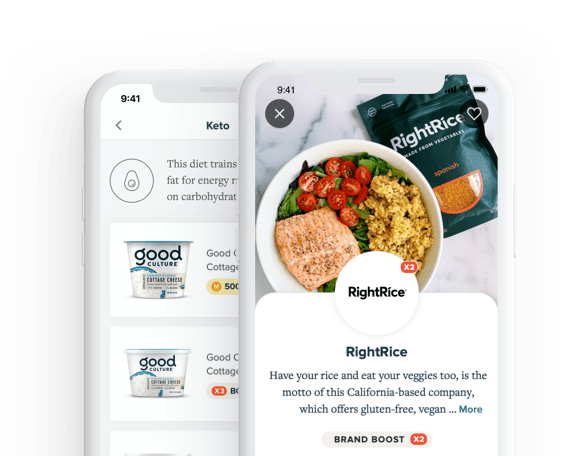
When it comes to choosing the safest products you can trust, turn to Merryfield. Our Clean Council of industry experts scrutinizes scores of ingredient labels to make sure every product on our app meets a strict set of standards. Read more HERE.
Better-for-you brands.Always rewarding.


Apple and the Apple logo are trademarks of Apple Inc., registered in the U.S. and other countries. App Store is a service mark of Apple. Google Play and the Google Play logo are trademarks of Google LLC.